
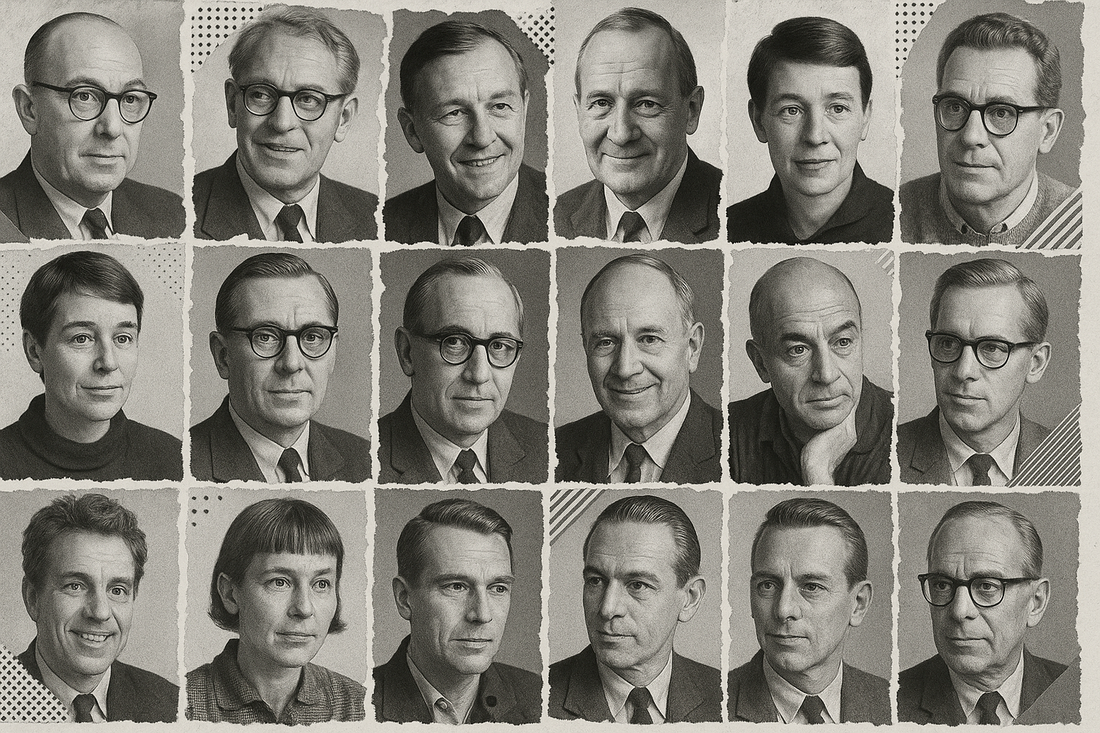
Top 15 Mid-Century Modern Designers You Should Know
The golden age of modern design was shaped by visionaries who saw furniture not just as a function, but as form, sculpture, and a reflection of changing lifestyles. From the warm minimalism of Danish cabinetry to the experimental spirit of post-war America, these 15 mid-century designers defined an era — and their work continues to influence interiors across the world.

Arne Jacobsen (1902–1971, Denmark)
Famous for: Egg Chair, Swan Chair, Series 7 Chair
Originally trained as an architect, Jacobsen brought sleek modernism to public buildings and home interiors alike. His furniture designs were futuristic yet refined, balancing curves and clean silhouettes. His iconic Egg Chair, created in 1958 for the SAS Royal Hotel in Copenhagen, remains a timeless symbol of Scandinavian design.

Hans J. Wegner (1914–2007, Denmark)
Famous for: Wishbone Chair, Round Chair, Papa Bear Chair
Often called “the master of the chair,” Wegner designed over 500 chairs in his lifetime. Trained as a cabinetmaker, he brought technical mastery to every detail, often leaving joinery exposed to showcase its beauty. His organic shapes and honest use of wood helped shape the global appeal of Danish modern.

Charles & Ray Eames (Charles: 1907–1978, Ray: 1912–1988, USA)
Famous for: Lounge Chair & Ottoman, Eames Moulded Chairs, Storage Units
This husband-and-wife duo blended playfulness with rigorous design thinking. With backgrounds in architecture, art, and textile design, they were pioneers of bent plywood and fibreglass furniture. Their approach was joyful, democratic, and rooted in the belief that good design should improve everyday life.

Finn Juhl (1912–1989, Denmark)
Famous for: Chieftain Chair, NV45, France Chair
Juhl treated furniture as sculpture. Unlike many of his peers, he was more interested in form than function. His early work introduced organic shapes and floating seat elements, which challenged the rigidity of modernist design. Today, his pieces are among the most collected and celebrated in Danish design history.

Florence Knoll (1917–2019, USA)
Famous for: Knoll sofas, executive desks, planning units
A trained architect and protégé of Mies van der Rohe, Knoll redefined office furniture with clean lines and modular forms. She also built the Knoll brand into a global design powerhouse, commissioning the likes of Saarinen and Bertoia. Her minimalist, functional style helped shape the modern workplace.

Pierre Jeanneret (1896–1967, Switzerland)
Famous for: Chandigarh Chairs, Committee Chairs
Jeanneret’s work gained renewed attention in the 2000s, especially his teak and cane chairs designed for the Indian city of Chandigarh. Working alongside his cousin Le Corbusier, he helped design the city and filled it with functional, local-material-based furniture that bridged modernist ideals with regional practicality.

Eero Saarinen (1910–1961, Finland/USA)
Famous for: Tulip Table, Womb Chair, Executive Chair
Saarinen’s furniture defied conventional structure, favouring fluid forms and architectural innovation. Trained in sculpture and architecture, he designed each piece with bold, futuristic flair. His pedestal-based Tulip Table remains one of the most elegant solutions to visual clutter in dining rooms.

Alvar Aalto (1898–1976, Finland)
Famous for: Paimio Chair, Stool 60, Tea Trolley
Aalto believed design should follow human needs and nature. His bentwood furniture introduced warmth into modernism, and his designs often drew from Finnish landscapes. A pioneer in humane, organic design, he helped pave the way for later Scandinavian designers.

Isamu Noguchi (1904–1988, USA/Japan)
Famous for: Noguchi Coffee Table, Akari Light Sculptures
Noguchi’s work straddled East and West. A sculptor first, his furniture designs are poetic, minimalist, and deeply artistic. The Noguchi Table, designed for Herman Miller in 1947, remains a sculptural centrepiece in mid-century interiors.

Verner Panton (1926–1998, Denmark)
Famous for: Panton Chair, Flowerpot Lamp, Cone Chair
Panton injected bold colour and form into the modernist palette. A pioneer of plastic furniture, his work broke with the wood-and-fabric norms of Scandinavian design. His psychedelic interiors and space-age pieces captured the radical energy of the 1960s.

Poul Kjærholm (1929–1980, Denmark)
Famous for: PK22 Chair, PK80 Daybed
Known for his refined use of steel and leather, Kjærholm viewed furniture with the eye of a minimalist sculptor. His work is cool, quiet, and exquisitely balanced, combining industrial materials with artisanal detail.

Børge Mogensen (1914–1972, Denmark)
Famous for: Spanish Chair, J39 Chair, Hunting Chair
A champion of democratic design, Mogensen created honest, enduring furniture that was meant to be lived in. His use of oak and natural leathers reflects a warm, grounded approach to modernism.

Gio Ponti (1891–1979, Italy)
Famous for: Superleggera Chair, D.153.1, La Cornuta Desk
Architect, designer, and editor, Ponti helped bring Italian modernism to the global stage. His furniture fused elegance with experimentation, and his Milanese style offered a lighter, more expressive take on modern living.

Charlotte Perriand (1903–1999, France)
Famous for: LC4 Chaise (with Le Corbusier & Jeanneret), Les Arcs Furniture, Bibliothèque Wall Units
A trailblazer in a male-dominated field, Perriand helped define modern living through modular systems and functional minimalism. Collaborating with Le Corbusier and Pierre Jeanneret in the 1920s, she played a critical role in shaping the iconic LC series, though her contributions were long overshadowed. Later, her work for the French ski resort Les Arcs brought warm, natural materials into modernism. Her designs feel bold, rational, and deeply human.

George Nelson (1908–1986, USA)
Famous for: Bubble Lamps, Marshmallow Sofa, Coconut Chair
As design director for Herman Miller, Nelson introduced groundbreaking concepts in modular living. His designs were witty, playful, and futuristic — think starburst clocks and marshmallow sofas. He also nurtured talents like the Eameses and Noguchi.